Tuesday, March 15, 2016

MEXICAN VACATION

Each year I am surprised by how green some plants are when they are uncovered by the retreating snow. 
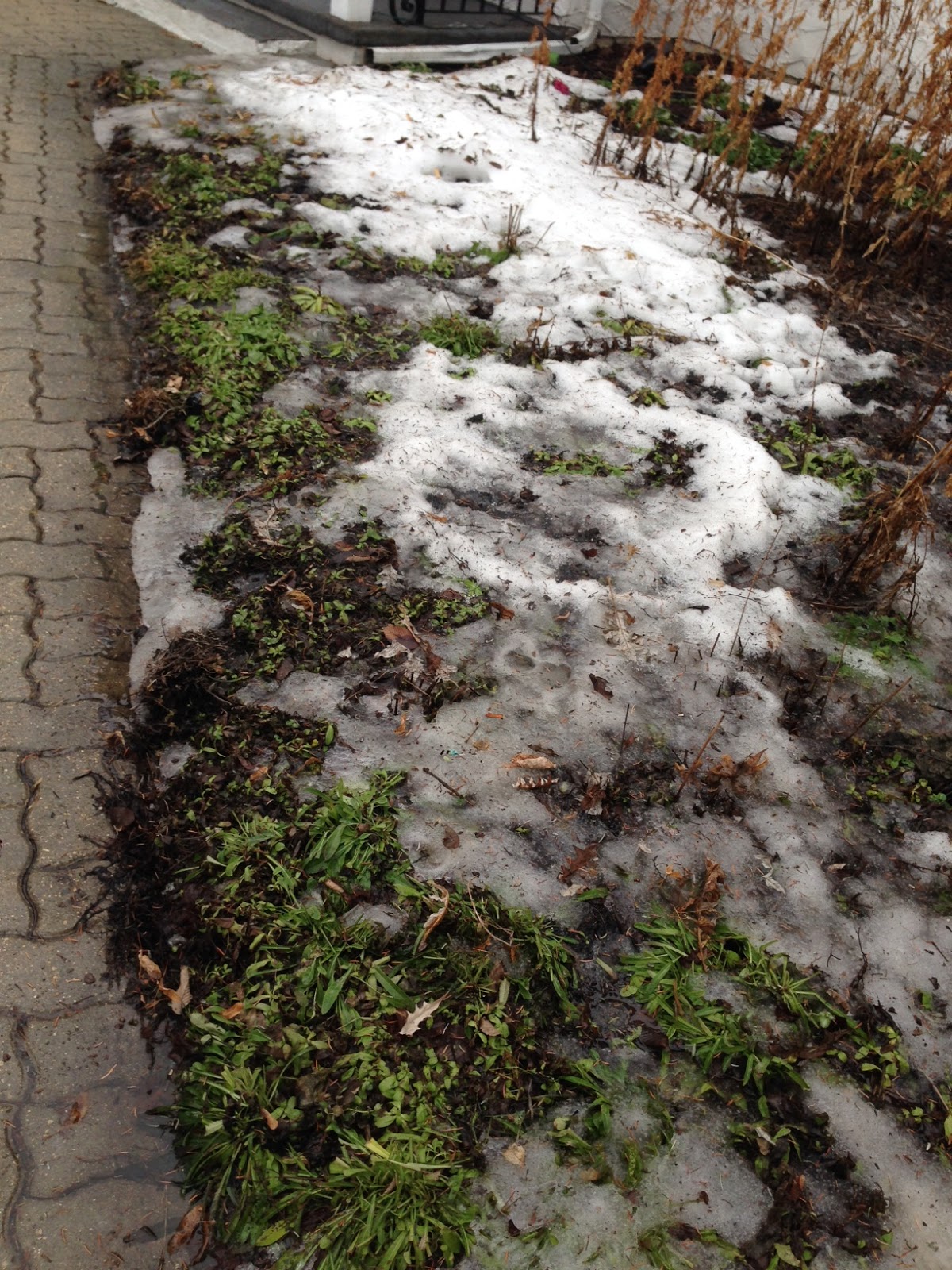
I expect them to have withered away and disappeared altogether, but here they are, Campanula and Forget-Me-Nots aplenty, looking somewhat bedraggled but ready to rock and roll if the warm weather were to continue.


Instead of more shots of soggy half-buried gardens I will share some photos of a garden from the hotel I recently stayed at in Mexico. 

While the plants between the bungalows were lush with bright bird-of-paradise blooms, the garden was more arid than tropical and I felt like I could have been in Arizona with all the cacti.

 To me it looks almost like a museum and I expect to see cards indicating the type of plant and a bit about the history of the area.

The restaurant under the eaves was well positioned to take advantage of the garden and courtyard.

With no change in the seasons as we know it in zone 3, there is always something blooming in this tropical paradise.


Sunday, February 28, 2016

MONET GARDEN UPDATE

One of the main reasons I started blogging was to keep records of my numerous gardens and their myriad plants, still, time can be elusive and here I find myself  2 years since my last updated map of the west-facing 'Monet Garden' in the front yard of our zone 3 home. 


While the general colour-theme endures much has changed.

The entire front bed was dug up in the fall of 2014 and removed for foundation work. 
I raised the portion between house and path by 8 inches while adding tall Ostrich Ferns and Tree lilies since there is no shortage of tall plants in the front of this garden.  The Ostrich Ferns are a final acceptance of how shady this space is,


In fact I would have thought it too shady here for gorgeous, enormous tree lilies if there had not been some living here before I arrived on the scene (back left).

I was not kidding about taller plants in the front of the garden!  Next year the Echinops will also be tall on the left of the path (mixed with the Herons) and the gap in the bottom right of this photo will be filled by Echinops, Monkshood, or both. 

One way to attract people into the gardens is to almost hide some plants behind others, rewarding the explorers. I pruned back this path last fall in the hopes it will invite more foot traffic. 

You begin to see above how smashing it will look in two more years with the taller lilies sprouting up from amongst the tall Ostrich ferns, creating a dense canopy reinforcing the height of the raised bed to the left of the path.  I also lined the path with transplanted Forget-me-nots, which incredibly bloomed not just in spring, but all summer long. 

 Forget-me-nots now rule where once Lamium formed the densest of mats.
Columbine have been moved out - they are pretty when viewed close up but were totally lost in this hot mess.
White Pulmonaria (though thriving here) were moved to the more appropriately coloured 'Moon Garden'.
A dozen dwarf yellow Foxglove will add discrete contrast to the dominant blues and purples.
Calla Lilies will not be back as I focus on (native) perennials to build habitat as much as a beautiful garden.

Every year I am able to whittle down the variety of plants further in this part-shade bed, capitalizing on its specific conditions such as its rich, moist soil and pockets of sunshine.  There are still 18 different plants on the map but the longer I am here the smaller that number will get: the Pasque Flower and Siberian Iris are still in their testing phase and the Dumstick Allium are not so gradually on their way out.

The Lamium and Daylilies are perfect: low maintenance, aggressive, but boxed in and easy to control.

***

Sunday, January 10, 2016

2 YEAR MOVE - rose of sharon

Some landscaping requires longer term planning, in this particular case a two year move but three or more years before the desired look could be achieved.
Good thing perennial gardeners have patience.


Both a blue and pink Rose of Sharon graced our back yard in Toronto, and while they looked lovely apart, when the Dogwood in the back left corner passed, I bet that they would look even lovelier if I could get their pastel blooms mingling together.

That fall I started a sort of rejuvenation pruning and cut back the Rose of Sharon by one third, I let it grow in the same place for one year before cutting it back again by one third the following fall, then finally transplanting it.

The space left by the Rose of Sharon seen above was quickly filled in by transplanting some of the yellow Rudbeckias closer to the fence. I also pruned back the lower limbs of the Japanese Maple, letting more light to the understory.

They say that shrubs are the skeletons of the garden and if so, apparently I like mine 'bear bones'. To me it felt a bit cramped before, even though I like a full garden.


The Blue Rose of Sharon looked comfortable in its new home, however I moved away and will never be able to know for certain if it got enough light and intertwined with its pink sister. 

Hopefully I did enough to help it along:
- I pruned back branches above it (from our neighbour's tree) quite extensively to give it more light, 
- I pruned it substantially to lessen the overall foliage the roots would need to support post-transplant
- I used a root-stimulating fertilizer post-transplant and kept it well watered

Perhaps I will just have a peak over the fence next time I am visiting Toronto in the summer...

***
Sharing with Outdoor Wednesday

Saturday, November 28, 2015

NEEDLE MULCH

Last summer I began to use the needles from our large Spruce trees as mulch.  

Aesthetically I like the natural look (once the plants fill out one cannot see the the garden floor in any case) and functionally this reliable source says not to worry about acidity levels.  So I don't.

There is something rewarding about making use of the bounty from my yard, even the parts that others may think of as waste. Why pay with my taxes to have this taken away only to go out and buy a different type of mulch?

For the same reason I compost yard waste and burn the wood I prune in our outdoor chimney.  It just makes sense.

Are there any other 'urban homesteaders' out there?


Wednesday, November 04, 2015

END OF THE MONTH VIEW - october


  This year we are having a relatively mild transition to winter here in zone 3 and there are still some blooms in the garden although it may not appear so at first glance.

Last year I removed all the strictly yellow Rudbeckia and left only the bi-coloured varieties.

The last of the Mums.

This pansy was one of the first things I planted in spring. 

The Lamium-maculatum may not be screaming for attention but they bloom all season.

The Heliopsis helianthoides are also long lasting bloomers.

This is the real treat - a new Monkshood for me, appropriately called Autumn Monkshood which did not start blooming until most other plants were well past their best.  
I will be sure to add more next year!

***

Thursday, October 15, 2015

GARDEN BLOGGERS BLOOM DAY - october

Even the back lanes in my neighbourhood look inviting at this time of year.

 Not a bad view from my front lawn, eh?

 Despite the time of year there are still some pockets of colour  up here in zone 3 with Rudbeckia and Salvia.

The Echinops seed heads retain interest right through until the snow flies.


 And speaking of the snow flying, this was a blizzard of another kind...

***

Monday, October 12, 2015

IN A VASE MONDAYS

What is one to do when the only flowers available are a multi-coloured mix from the check-out aisle at the grocery store?

It can be a conundrum.


I like to make the best of it by separating out the whites into their own bouquet.

 In this case I joined them with 3 roses that if left in the colourful vase would have not had nearly as much impact.

To further differentiate the final results I cut down the second group dramatically and put them in a much shorter vase.

Now who would guess that each bouquet came from a standard, brash check-out arrangement, would you?

***
Sharing with In A Vase Mondays


Sunday, July 26, 2015

END OF THE MONTH VIEW - july

A tour of the yard and its many gardens, from back to front.

Clematis, Daylily, Asiatic lily, husband.

Daylily, Clematis, Lamium.

Clematis, Salvia, Morning Glory, Daylily, Peas, Squash, Rosemary & Calla Lily that amazingly survived our zone 3 winter.

Suzie checking out the "Cantina".

Path into the Sun Garden; more of a late summer garden...

Milkweed, Rudbeckia, Heliopsis, Sunflowers.

On the path through the Sun Garden; tall Sunflowers are 'volunteers' from my bird feeders.

'Cheyenne Spirit' Coneflower is amazing, alongside the taller bi-coloured Rudbeckia.

Path off to the driveway.

 
Path to the front yard.

Not pretty yet, but Heliopsis are beginning to fill in under the spruce.

The Globe Thistle (right) are reaching great heights and the Sedum (left) in the rock garden has been blooming for weeks.

 This Lamium blooms all summer long. Quite aggressive in this rich soil and semi-shade it is hemmed in by sidewalk and equally aggressive daylilies.

Forget-me-nots have beautified the front garden for weeks while the Calla Lilies and Monarda have just begun to bloom.

The scent of these giant Lilies is incredible, both they and the ferns will get substantially larger over the next few years and I have high hopes for how great they will look together.

Monkshood over 6 feet tall! Half I cut back in spring to lengthen the clump's bloom time.

I believe there are three colours of Monarda but so far only one is in bloom.

Drumstick Allium, Campanula, Verbascum, Monkshood, Forget-me-not, volunteer sunflowers.

I like to combine plant material from the yard with annuals in my yard urns,.

Lamium in front of the hedge transitions nicely from the Monet to the Moon Garden.

Each year I will need fewer Impatiens to fill in between the Astilbe and Hosta in front the Bleeding Heart.

Obedient Plant and Liatris: though still a ways away from blooming I love the foliage of the latter.

Daisy, Peony, Nasturtium, Coneflower, Bleeding Heart, Impatiens. Who knew compact, white Nasturtium existed? Let us hope they begin to bloom soon.


Bishop's Goutweed with Peony and Lamb's ear.

***